

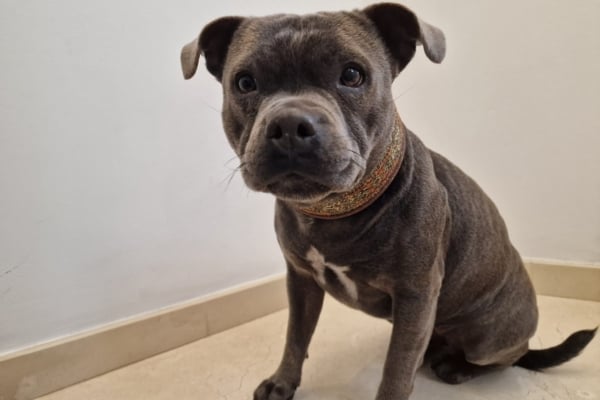
When Runa, our Staffordshire Bull Terrier, was about 2 years old, we thought she was the perfect dog.
She adored people.
Strangers, friends, the postman — it didn’t matter. The only way she could hurt you was by licking you to death.
NOTE: This page may contain affiliate links, which means Staffy Dog may receive a small commission for anything purchase via these links, at no cost to you. This keeps our tails wagging.
And because of that, we assumed she was just… good with everyone.
 |
But other dogs were a different story.


Especially female dogs.
At first, it was subtle. On walks, we’d notice her body stiffen slightly as another dog approached. Her ears would go forward. Her tail would stop wagging.
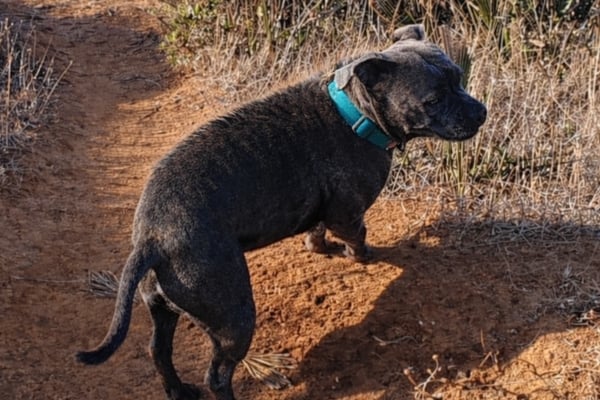
And then — almost like a warning sign we didn’t fully understand at the time — the hair along her spine would rise up into a little mohawk. Standing straight up from her shoulders to her tail.

No barking. No lunging. So we told ourselves she was fine.
She wasn’t.
 |
Then one afternoon in the park, we came face to face with a female Labrador — big, bouncy, absolutely unbothered, trotting straight down the middle of the path.
Runa saw her. Her whole body changed.

The mohawk appeared. The lead went taut.
The two dogs froze, locked in a stare — each trying to read the other. A long, loaded second.
Then Runa made her move. One sharp bark-growl and a little lunge forward. All bravado. All bluff.
The Labrador just blinked at her.
This time, it was fine. But we both knew — if a dog ever calls her bluff, Runa is going to be in serious trouble. Because despite every stereotype that follows the breed around, this dog is no fighter. She’s a nervous wreck in a muscly jacket.
We looked at each other right there on the path.
”We’re making it worse, aren’t we.”
It wasn’t a question.
Because we both remembered the puppy who used to bound up to every dog without a second thought — fearless, tail going like a helicopter, absolutely delighted with the world. That dog hadn’t been born nervous. Somewhere along the way, we’d taught her to be.
Here’s what we hadn’t understood:
The moment she tensed up… we tensed up.
We’d shorten the lead. Hold our breath. Brace for something to happen. And Runa felt all of it — right down the lead and into her collar.
Our anxiety became her anxiety. Her mohawk went up. Which made us more anxious.
We weren’t walking Runa. We were co-producing a drama — and she was taking her cues from us.
What started as a small moment of uncertainty between two dogs had slowly turned into a pattern. Tension → avoidance → more tension. Before long, walks stopped feeling relaxed. We weren’t enjoying them. And neither was she.
That’s when we realised something important:
Runa didn’t hate other dogs. She just didn’t feel comfortable. And we were accidentally making it worse.
So we decided to actually fix it — properly. Not by avoiding dogs. Not by hoping she’d grow out of it. But by understanding what was going on and giving her a better way to respond.
We followed the Tackling Reactivity course from Spirit Dog. Nothing extreme. Just small, structured changes:
- Learning how to read her body language earlier — including that little mohawk moment before things escalated
- Creating enough distance so she could stay calm
- Rewarding the right moments instead of reacting too late

And slowly, things shifted.
She stopped locking up when she saw another dog. The mohawk stopped appearing. We stopped bracing for the worst.
Walks became… normal again.
She still isn’t the kind of dog who wants to play with every dog she meets. And that’s fine.
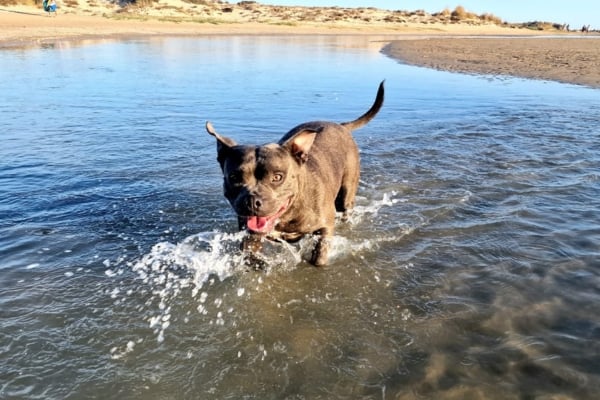
But now? She can walk past them calmly. No tension. No stress. No second-guessing.
Because the goal was never to make her “love every dog.”
It was simply this: to feel relaxed, safe, and under control — together.
 |
If your Staffy gets tense around other dogs on lead, you’re not alone. And more importantly — it’s something you can improve.


